The Sixth Faction (The Sixth Faction, #1)
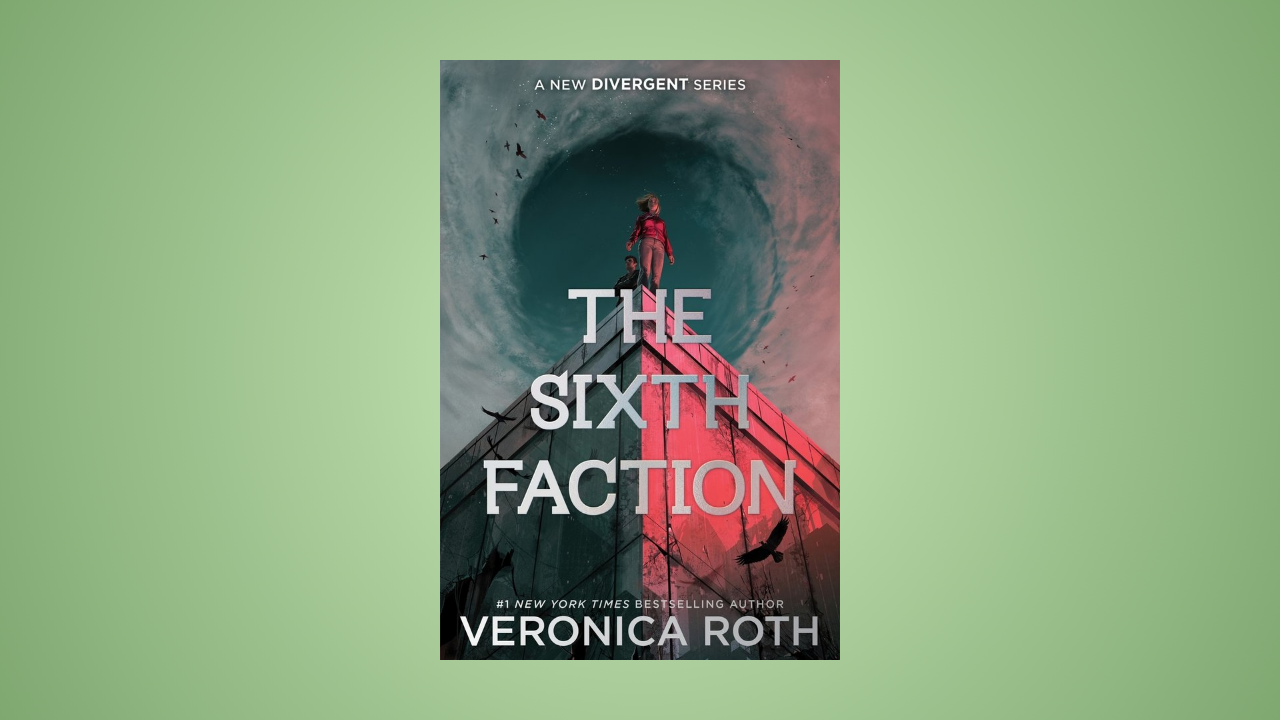
About the book
Author: Veronica Roth
Publisher: HarperCollins
More info:
The StoryGraph | Goodreads
Note: Content and trigger warnings are provided for those who need them at the bottom of this page. If you don’t need them and don’t want to risk spoilers, don’t scroll past the review.
Buy and support indie bookstores (+ I earn a small commission):
Bookshop.org (print or ebook) | Libro.fm (audio)
My review
I wasn’t especially obsessed with the Divergent trilogy back when it first came out, but I did enjoy it, and I have enjoyed several of Veronica Roth’s books since. I also had an absolute blast rereading the original trilogy earlier this year to see if I could puzzle out Roth’s intentions and choices on its controversial ending (which I think I did!). So suffice it to say that I have been very excited for The Sixth Faction, mainly because a) I know how much Roth has grown as a writer in the last 13 years, and b) I can’t wait to see if she chooses to end this alternate-reality duology the same way.
Y’all. This glow-up is INSANE.
Sorry to anyone who imprinted on the originals, but it’s pretty indisputable: The Sixth Faction is a MUCH better-written book than Divergent, mostly because Roth has a much better mastery of world-building and internal dialogue these days. With Divergent, it often felt like she was sacrificing those things for the sake of fast pacing; in The Sixth Faction, she manages to do all of it and still keep the pace up. (If you want, just compare the passages from just before Tris’ aptitude test that I put at the bottom of this review.)
I will say, there were certain changed details that I didn’t love, but I think that was mostly because of my own expectations. I had assumed that all peripheral details — that is to say, things like the aptitude test’s simulation and Four’s job in Dauntless — would be the same as they were in Divergent. Maybe there would be some additional world-building details added in, but nothing that broke the “canon” of the first book except the single experiment of Tris’ faction choice. That’s not the case here. MOST details are the same, but Roth took liberties with others.
And by the way, that includes a really big detail about the ending that makes me a lot less certain about my conviction that this duology is going to have the same ending as Divergent!!! Y’ALL ARE NOT READY!
Finally, it’s hard to say if I think people could read this one without having read the original trilogy first. It’s certainly a standalone story, so it wouldn’t be hard. But it was just so, SO fun to experience this book in conversation with the original. I think that’s easily going to be the better, more entertaining reading experience.
Here are those passages for comparison. Enjoy!
Divergent:
“Have a seat and get comfortable,” she says. “My name is Tori.”
Clumsy, I sit in the chair and recline, putting my head on the headrest. The lights hurt my eyes. Tori busies herself with the machine on my right. I try to focus on her and not the wires in her hands.
“Why the hawk?” I blurt out as she attaches an electrode to my forehead.
“Never met a curious Abnegation before,” she says, raising her eyebrows at me.
I shiver, and goosebumps appear on my arms. My curiosity is mistake, a betrayal of Abnegation values.
Humming a little, she presses another electrode to my forehead, and explains, “In some parts of the ancient world, the hawk symbolized the sun. Back when I got this, I figured if I always had the sun on me, I wouldn't be afraid of the dark.”
I try to stop myself from asking another question, but I can't help it. “You're afraid of the dark?”
“I was afraid of the dark,” she corrects me. She presses the next electrode to her own forehead, and attaches a wire to it. She shrugs. “Now it reminds me of the fear I've overcome.”
She stands behind me. I squeeze the armrests so tightly the redness pulls away from my knuckles. She tugs wires toward her, attaching them to me, to her, to the machine behind her. Then she passes me a vial of clear liquid.
“Drink this,” she says.
“What is it?” My throat feels swollen. I swallow hard. “What’s going to happen?”
“Can’t tell you that. Just trust me.”
I press air from my lungs and tip the contents of the vial into my mouth. My eyes close.
The Sixth Faction:
I sit, my hands folded in my lap. She nudges the metal box open with her toe and takes out a syringe. Even through the plastic covering, I can tell the needle is big and thick. My mouth goes dry. She fumbles in the box for a bottle of what appears to be antiseptic and a cotton ball.
“Here’s how it works,” she says. “I stick you with this needle, which will flood your system with tiny transmitters and receivers. They'll all travel to your brain and set up shop there. Then I'll be able to use this”—she touches the computer—“to trigger the aptitude test. Which I could tell you about, but you won't remember what I told you once you're taking it, so there's really no point.”
She yawns. She's already done this ten times today, but I still can't believe she can be so casual about it.
“Tiny transmitters and receivers will…live in my brain?” I ask. “For how long?”
“Forever,” Tori replies.
“Forever?”
Tori rolls her eyes. “Your faction stores memories in its little Memory Vault, right?”
“Yes.”
“Well, how did you think they got the memories in there? Did you think your leader submitted detailed diary entries? No. They interface with a big, powerful computer, using the little transmitters and receivers that have lived in their brains since they were 16, when they took their aptitude tests.” She gestures widely to the room. “Hence all this. You know, Abnegation is really doing itself a disservice by discouraging curiosity. You should already know all this.”
“We know things when they become relevant,” I say. “Not just to indulge a whim.”
“I'm a big fan of whims, myself.” Tori brushes her fingers across the wings on her neck. “Got this ink on a whim, and now it's my favorite one.”
She opens the bottle of antiseptic and squeezes some of it onto the cotton ball. It's bright orange. She stands over me, and dabs it against the side of my neck.
“Why the hawk?” I ask her.
She smiles a little and tosses the soiled cotton ball onto the table. “The hawk symbolizes the sun. I was afraid of the dark.”
She picks up the syringe and sheets the needle.
“Not anymore?” I ask.
The needle is coming toward my neck. It looks more like the skewering end of a kitchen thermometer than the sewing needle I use to embroider. I should look away, or close my eyes, but instead, I watch—watch the light catching on the metal, and Tori's tattooed finger on the syringe’s plunger.
The pain is both sharp and deep. Her eyes find mine.
“Not anymore,” she says, and then everything goes black.
Content and trigger warnings
Gun violence
Death and grief
Death of a parent
Child abuse
Suicide/suicidal thoughts