Make Believe: On Telling Stories to Children
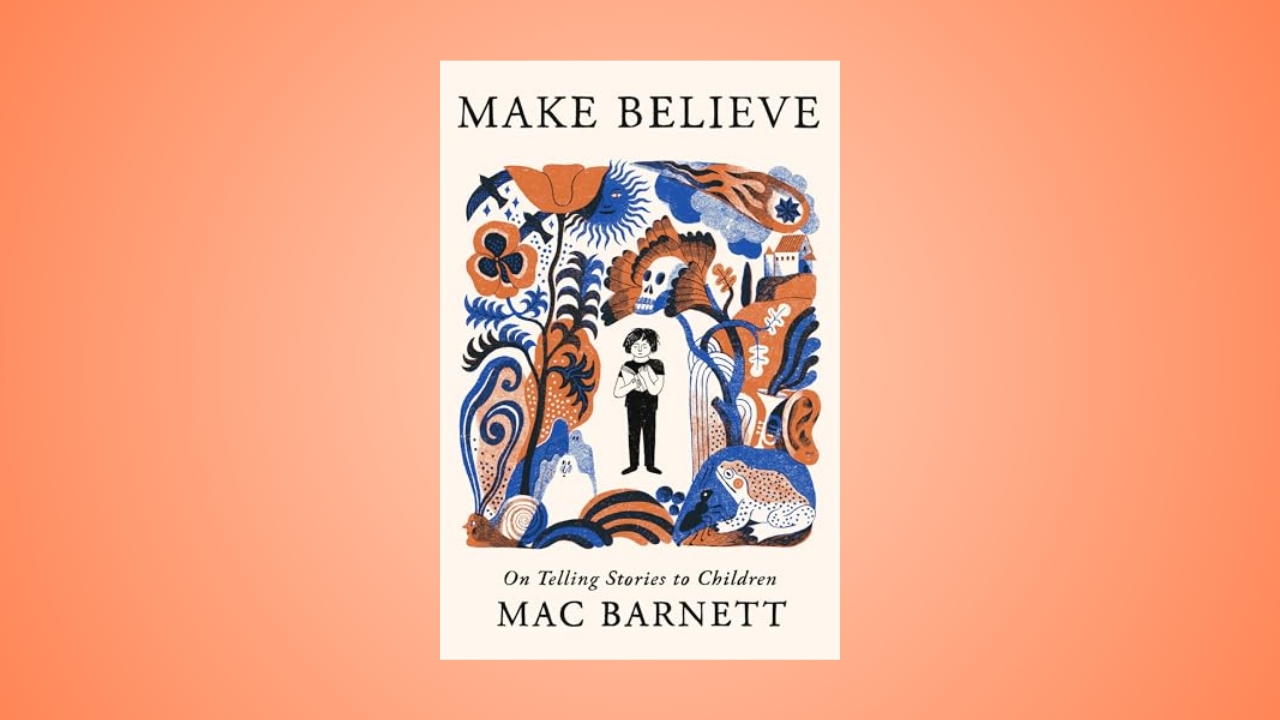
About the book
Author: Mac Barnett
Publisher: Little, Brown & Co
More info:
The StoryGraph | Goodreads
Note: Content and trigger warnings are provided for those who need them at the bottom of this page. If you don’t need them and don’t want to risk spoilers, don’t scroll past the review.
Buy and support indie bookstores (+ I earn a small commission):
Bookshop.org (print or ebook) | Libro.fm (audio)
My review
I’m relatively new to the world of children’s books (at least, as an adult). My daughter will be 2 on the 4th of July, so she’s only just become interested in books with a) paper pages and b) actual stories. And yet I already know how hard it is to sift through the sheer volume of kids’ books to find the gems that she’ll actually enjoy, not just teach her whatever adults want her to know.
This is essentially the thesis of Mac Barnett’s “first book for adults,” Make Believe. For the uninitiated, Mac Barnett is one of our greatest living children’s book writers. I hadn’t heard of him before I had a child, but it didn’t take long for me to find him and fall in love with his books. (He also writes an excellent Substack newsletter with Jon Klassen, Looking at Picture Books, in which the two co-authors dissect what makes classic children’s books really work.) In Make Believe, Mac gives us a sort of manifesto on the state of children’s publishing today, making the case in just three essays that kids’ books should be written for kids, not for adults. The whole book is very short — about two hours on audio — and well worth a quick read or listen. He knows what he’s talking about (obviously, as a widely beloved and bestselling children’s book author), and he makes his case clearly, warmly, and with both humor and obvious love for both children and his craft. The effect is that as a parent, I felt seen and also like I had new tools with which to evaluate kids’ books and talk about them in an informed way.
Now, the elephant in the room: Around the time of this book’s publication, others in the children’s book industry heard a quote from this book out of context, and it sparked a lot of outrage. The quote was Mac saying that “94.7%” of children’s books are bad, and the outrage, beyond simply offending some, raised a whole conversation about whether it’s okay for him to condemn so many kids’ books during an age of book banning and when it’s so hard for people who write books with important representation to actually make it onto the shelves. I don’t want to get into it too much because I’m not an expert, but this feels deeply overblown to me. For one, that quote made a lot more sense in context (he’s referencing a common adage called Sturgeon’s Law which says that “90% of everything is crap,” and cheekily says if we take that to be true, the percentage of kids’ books might be more like 94.7% — in other words, a more than average amount). For two, I believe that those diverse, important books that deserve more publishing deals and shelf space are probably mostly among that cheeky 5.3%, becuase they are written with love and care for actual children. And for three, I can tell you as a parent that he’s right! I walk into our public library and feel deeply overwhelmed by the number of picture books I could borrow and have absolutely no confidence that if I pluck one off the shelf, my daughter will like it. I have come to rely deeply on recommendations from librarians, booksellers, and fellow parents.
I do wish he had presented a few practical thoughts on how we, societally, can make the leap from our current state of too many kids’ books written for adults to most published kids’ books being written more for kids, but perhaps that will be his next book for adults!