Son of Nobody
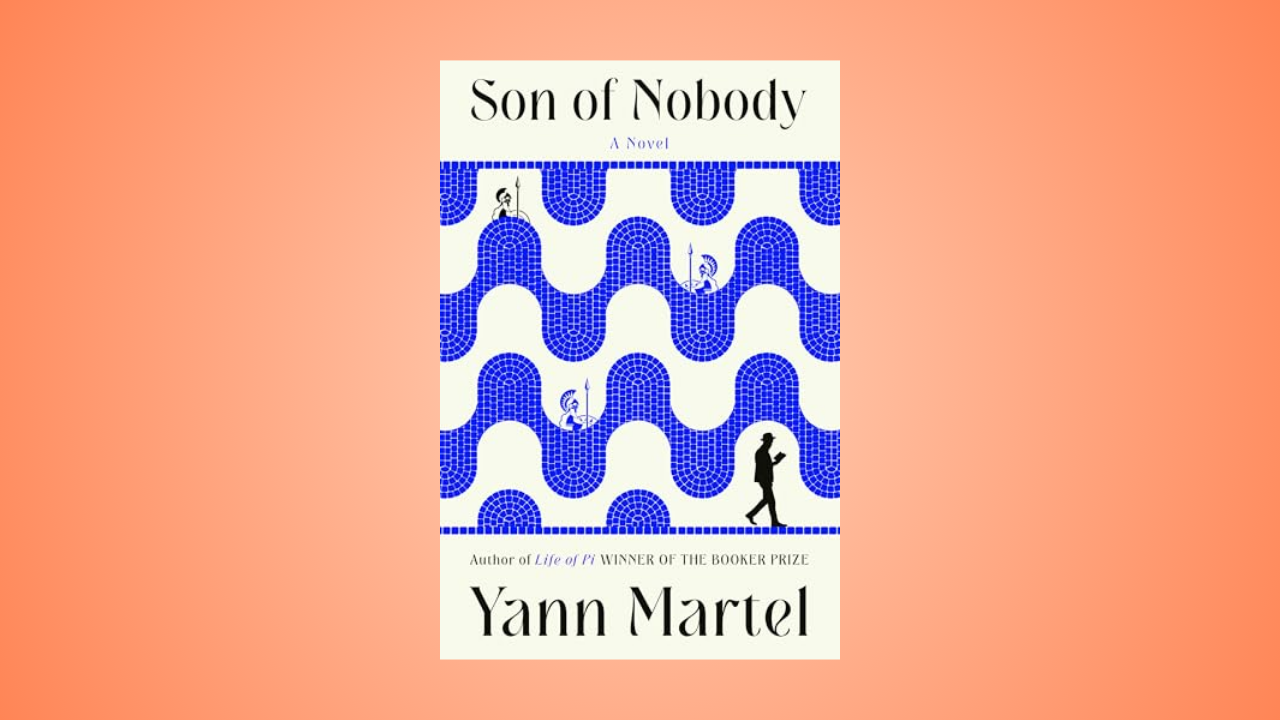
About the book
Author: Yann Martel
Publisher: W.W. Norton
More info:
The StoryGraph | Goodreads
Note: Content and trigger warnings are provided for those who need them at the bottom of this page. If you don’t need them and don’t want to risk spoilers, don’t scroll past the review.
Buy and support indie bookstores (+ I earn a small commission):
Bookshop.org (print or ebook) | Libro.fm (audio)
My review
I love Greek mythology retellings, particularly the ones that get shelved with literary fiction. Throw in an unconventional structure, all the better. So when I heard that Yann Martel (author of Life of Pi) had written a retelling of the Trojan War that splits the narration between a fictional long-lost text and the personal annotations of the man who discovered it, I was all in.
Harlow Donne is a husband and father living in Canada who finds out he’s accepted to a PhD program in Oxford, which he’d applied to on a whim. Despite the fact that his marriage is already rocky, he makes the decision to leave his wife and daughter, Helen, for a year to enroll. While there, he discovers an ancient account of the Trojan War about Psoas of Midea, a son of nobody (yes, just a regular-degular foot soldier). The parallels between them become more and more apparent as we go; Psoas had also left behind his wife and family and, as he becomes increasingly unhinged, we come to learn more about what Harlow missed while he was gone that caused his life to unravel, too.
This book surprised me with how emotional it was. The split narration is very uniquely presented: the top half of each page presents the “Psoad,” while as the bottom half contains Harlow’s footnotes, aka his personal account, which loosely tracks with when in time he discovered each chapter. Martel plays with the relationship between the two texts to not only draw the parallels I mentioned, but also ratchet up the tension and show Harlow’s mental state. For example, when he is coming to something he’d rather not remember, his personal commentary gives way to professional commentary, almost like you can feel him avoiding it by throwing himself into the work. This made me feel even more connected to Harlow AND it gave the story tension and propulsion, which kept me turning the pages.
The result is a moving, wholly unique novel that gives the reader much to think about when it comes to the stories we tell ourselves vs the ones we live, ambition, and what gets left behind in its pursuit.
I just recommend reading it in print or tandem (vs audio only or digital) because of the layout on the page!
Content and trigger warnings
Death of a child
Grief
War and violence
Animal death
Rape (quick mentions/Trojan war)