Seek Immediate Shelter
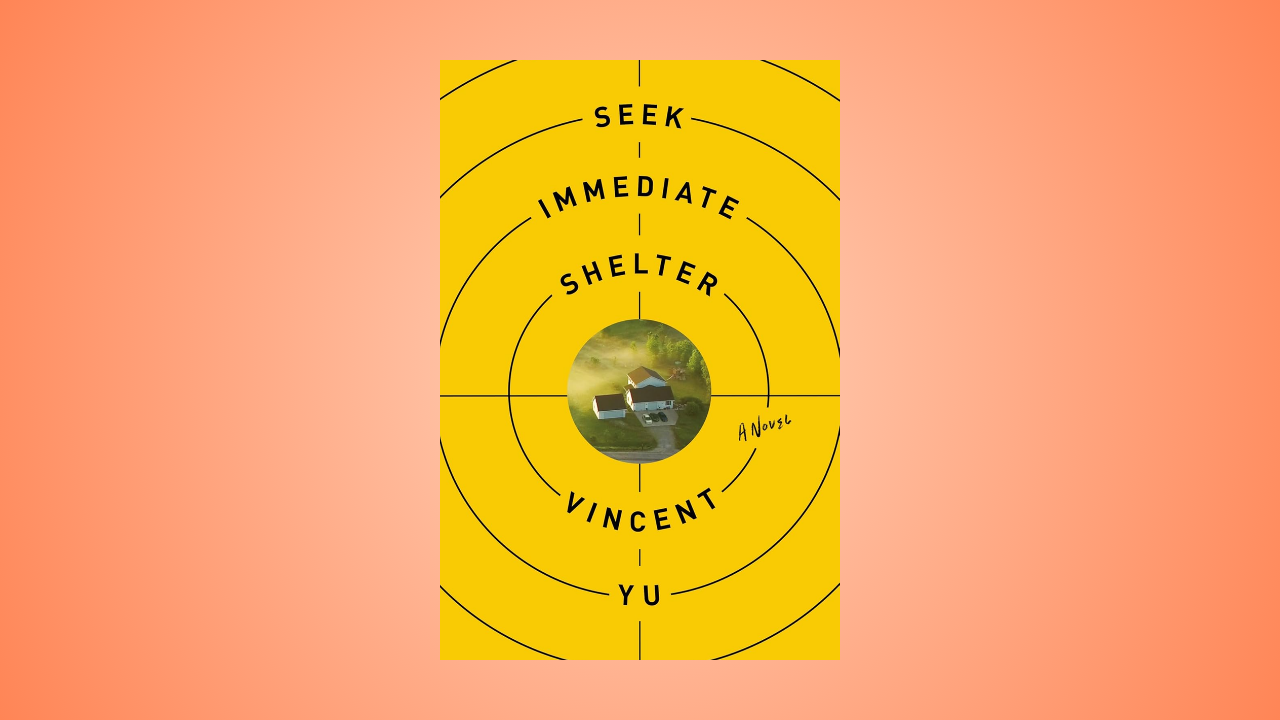
About the book
Author: Vincent Yu
Publisher: Flatiron Books
More info:
The StoryGraph | Goodreads
Note: Content and trigger warnings are provided for those who need them at the bottom of this page. If you don’t need them and don’t want to risk spoilers, don’t scroll past the review.
Buy and support indie bookstores (+ I earn a small commission):
Bookshop.org (print or ebook) | Libro.fm (audio)
My review
This book has a killer premise: an entire town gets a missile alert that says it’s not a drill, only to find out a few minutes later that it was a false alarm, and then they have to deal with the repercussions of how they acted when they thought they were about to die. That’s a book that’s just begging for a book club discussion, so I was excited when my IRL book club picked it and gave me a good reason to read it.
The first thing you need to know is that this book is one of those being marketed as a novel when it’s really a collection of short stories (think If I Survive You by Jonathan Escoffery or How High We Go in the Dark by Sequoia Nagamatsu). I had expected for the missile alert to happen at the beginning, then for us to see how various people reacted, then spend the rest of the book bouncing between their POVs to see the repercussions. Instead we get contained short stories giving each character’s arc a nearly full treatment with crossover moments interspersed throughout. This didn’t bother me too much, although most of my fellow book club members (who are not quite as accustomed to lit fic and not nearly as experienced with short stories) weren’t big fans.
That said, once you settle into the format, I think this book works quite well. It’s definitely not a happy book, but Yu has a talent for cutting to the quick of the human experience in a way that I found deeply compelling. My book club spent a lot of time discussing relatively existential questions, like which matters more: whether you do something regretful in the moment when you think you’re going to die, or how you atone for it afterward? Which of those things give us the truest understanding of who we are at our core (or is it somehow a combination of both)? There are no right answers to these questions, but Yu’s storytelling and character work make examining them feel like the whole point.
Overall, I quite liked this book, and I was impressed by it. I wouldn’t be surprised if it ends up nominated for the National Book Award this September.
Content and trigger warnings
Drug abuse and addiction
Death of a parent
Cancer
Homophobia
Infidelity