Pretend You’re Dead and I Carry You
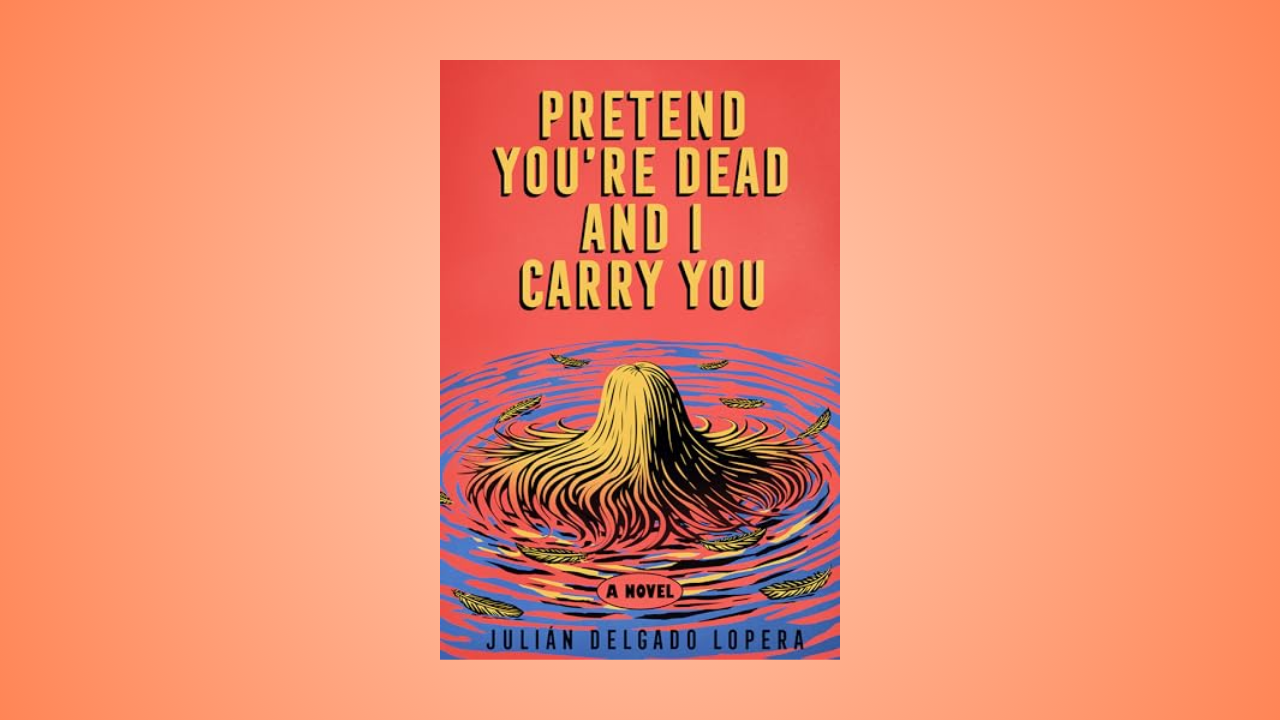
About the book
Author: Julián Delgado Lopera
Publisher: Liveright
More info:
The StoryGraph | Goodreads
Note: Content and trigger warnings are provided for those who need them at the bottom of this page. If you don’t need them and don’t want to risk spoilers, don’t scroll past the review.
Buy and support indie bookstores (+ I earn a small commission):
Bookshop.org (print or ebook) | Libro.fm (audio)
My review
Books like this are exactly why I read prize lists; without the National Book Award for Fiction, I don’t know if I ever would have heard of this one, much less picked it up! But I’m so glad I did, because I loved it, and I couldn’t be happier to see that it is not just a longlister but a finalist (maybe the winner?? I wouldn’t be mad!).
Pretend You’re Dead and I Carry You is a dual-timeline, dual- narration novel set in Bogotá, Colombia. It follows a girl named Valentina in the present as she faces the trials of early teenagerdom (including feelings for her best friend, Jesse), while her father spirals after the death of her mother. And it follows her father, Ignacio, in the past as he grew up in rural, hyper-machismo Colombia while developing feelings about himself and another (rather feminine) boy. There are also some incredible chapters told by Ignacio’s travesti (transfemme) mother, Mamadora Eléctrica.
This was such a pleasant surprise of a novel! It’s deeply felt, hilarious, and devastating, told in a voice that crackles with life. Mamadora Eléctrica is so vibrant and electric she could walk off the page; Ignacio has a visceral, heartbreaking story that won’t let you go; and Valentina’s sections are written with an aching clarity that will cut you to the quick. And there’s just a touch of magical realism toward the end that brings it all together like icing on a cake. (Travesti lore <333)
Lopera has given us just a glimpse of the way Latin America’s expectations of masculinity led queer boys to whiplash between grief and self-loathing vs joy and love — plus Bogotá’s underground drag queen scene in the 90s, plus the way queerness need not be an island when it can be a lineage — but it is more than enough to sink its claws into you.
Finally, I beg you to read this one via audiobook. The voice actors’ performances really brought these characters to life, and their treatment of the novel’s frequent use of spanglish felt nothing short of natural (plus, their inflection really helped me get the most out of it given that I don’t speak Spanish).
Please read this book!
Content and trigger warnings
Homophobia and transphobia
Hate crimes
Death of a parent
Self-harm
Sexual content
Violence
Terminal illness