Paradiso 17
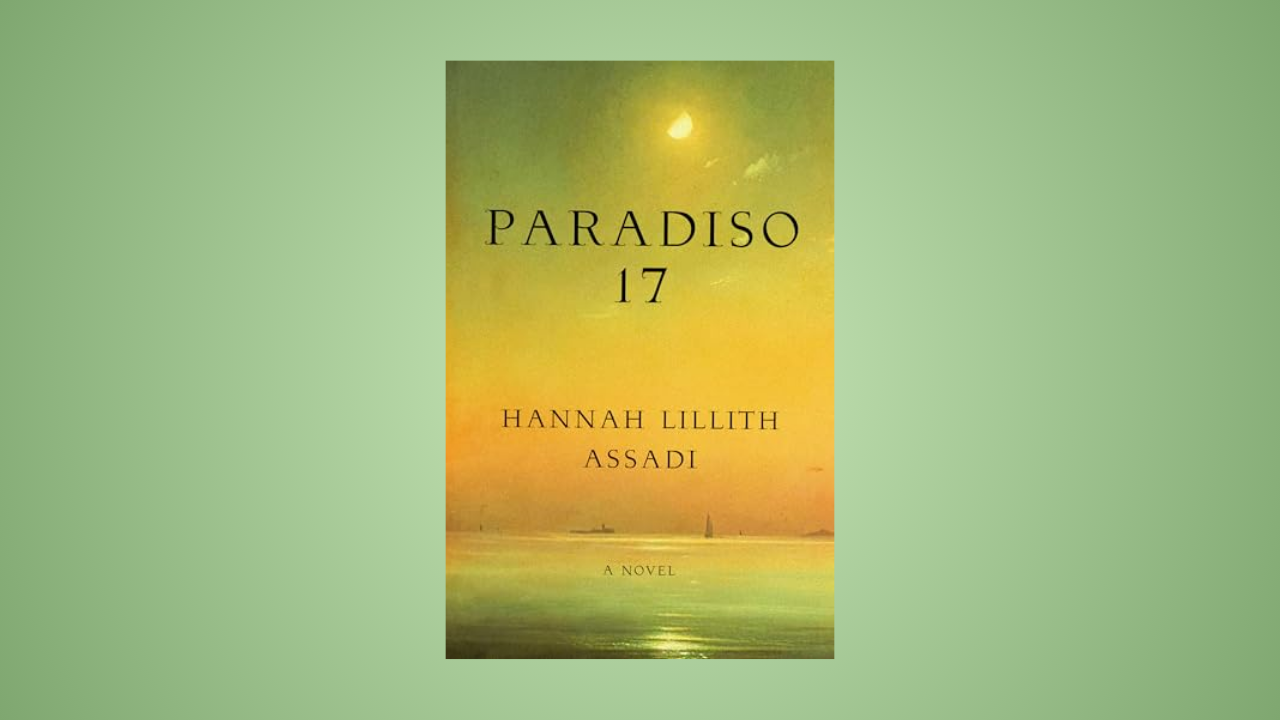
About the book
Author: Hannah Lillith Assadi
Publisher: Knopf
More info:
The StoryGraph | Goodreads
Note: Content and trigger warnings are provided for those who need them at the bottom of this page. If you don’t need them and don’t want to risk spoilers, don’t scroll past the review.
Buy and support indie bookstores (+ I earn a small commission):
Bookshop.org (print or ebook) | Libro.fm (audio)
My review
Paradiso 17, longlisted for the Women’s Prize, is a beautiful and sweeping tribute to the author’s father’s life as a member of the Palestinian diaspora. It opens just after the main character, Sufien, has died of cancer, as what remains of him tries to speak to his daughter and granddaughter. We spend the majority of the book learning about his life, from his family’s expulsion from Palestine in April 1948 when he was a child, through his young adulthood in Italy and his adulthood in New York City and Arizona.
If you liked the structure and style of My Friends by Hisham Matar, I think you will like this one too. They reminded me of each other in many ways: the way they both begin at the end and then spend the book looking back, chronologically, at the main character’s life; the beautiful prose; the ways they explore exile and rootlessness. And yet of course, this one has an energy and heart that is wholly its own.
Knowing that this is a tribute by the author to her father, what impresses me most is how morally gray Sufien is. He is flawed and sometimes quite unlikable, and yet also someone you can’t help but root for. Also, as someone who is a big fan of speculative elements in my literary fiction, I loved the sometimes figurative, sometimes literal presence of ghosts in Sufien’s life.
A well-deserved Women’s Prize nomination. Do yourself a favor and don’t miss this one.
Content and trigger warnings
Suicidal ideation (repeated)
Cancer/terminal illness
Animal death
Infidelity
Racism
Death of a parent
Miscarriage (minor)