Midnight’s Children
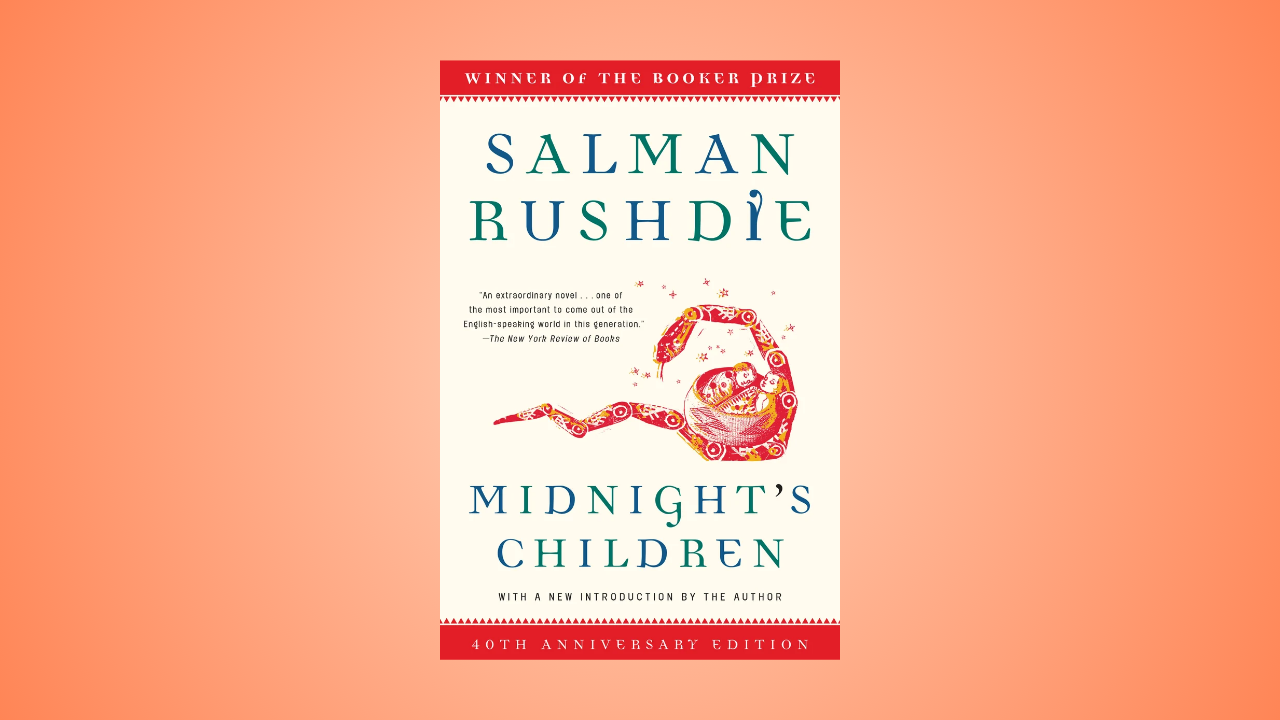
About the book
Author: Salman Rushdie
Publisher: Random House
More info:
The StoryGraph | Goodreads
Note: Content and trigger warnings are provided for those who need them at the bottom of this page. If you don’t need them and don’t want to risk spoilers, don’t scroll past the review.
Buy and support indie bookstores (+ I earn a small commission):
Bookshop.org (print or ebook) | Libro.fm (audio)
My review
I had a college professor who was obsessed with Rushdie, so he’s been on my radar as one of our living greats for years. But until now I had only read his most recent novels, Quichotte and Victory City. All that to say, I both did and absolutely did not know what I was getting into with Midnight’s Children!
An intensely voicey, wickedly smart novel about the years following India’s independence, Midnight’s Children is told by a character named Saleem Sinai, who was born as the clock struck midnight on January 1 as India herself was born. He’s narrating his family history and life story to a woman named Padma. For everything it explains to the Western gaze, I’m sure there are a dozen references it doesn’t. There’s magic, too, as in every great tale.
I won’t pretend I have much to add here, as this book is a modern classic that won lots of awards, and I have very little knowledge about the period of history it covers. But I can tell you that it’s a fascinating look at how everyone is a main character in their own story, even set against great, sweeping events of history. It was an intense choice to pick this up during the chaos that is December, but I am extremely glad to have read it. Pairing it with the chapter summaries and analyses of SuperSummary was also a great choice to help me make sure I got the most out of it.
Also — and I couldn’t have done this on purpose if I tried — I finished it at 11:59 PM on New Year’s Eve, lol!
Content and trigger warnings
War, violence
Death, grief
Rape (war crimes, observed briefly)